Squirrels: Tiny Brainiacs
You've probably watched a squirrel dart across your yard, freeze like a statue, then sprint up a tree for no obvious reason.
Maybe you thought it was just being weird. But here's the thing — that little creature running around with a nut in its mouth is operating on a level of intelligence that genuinely surprises scientists.
Squirrels are not just cute. They are clever, strategic, emotionally complex, and honestly a little bit sneaky. Once you know these facts, you'll never look at one the same way again.
They Have a Seriously Impressive Memory
Every autumn, a single gray squirrel buries somewhere between 1,000 and 10,000 nuts in separate locations across its territory. Not in one pile — in hundreds of individual spots, each one chosen and remembered. And then, months later, they find them. Studies have shown that squirrels can relocate up to 80% of their buried stashes, even under several inches of snow. They don't find the nuts by smell alone — they actually remember the specific locations using spatial memory, the same mental mapping system humans use to navigate cities. Their hippocampus — the brain region tied to memory — physically grows larger in autumn to handle the increased workload, then shrinks again in spring. Their brains literally expand for the job.
They're Also Master Deceivers
Here's where it gets really interesting. Squirrels know they're being watched. If a squirrel notices another animal — or a human — observing while it buries a nut, it will perform what researchers call "deceptive caching" behavior. It goes through the full motion of digging and burying, but puts nothing in the hole. Just pretends. Then it runs off and buries the real nut somewhere else entirely. This kind of deliberate deception requires a squirrel to understand that the observer has its own perspective — a cognitive skill most animals do not have. Even some primates struggle with this concept.
Their Tails Do More Than You Think
That big, bushy tail isn't just for looking good on Instagram. It's a multi-purpose tool. Squirrels use their tails for balance when leaping between branches — sometimes jumping distances of up to 10 feet in a single bound. They wrap their tails around themselves like a blanket in cold weather. They use tail flicking as a communication system, with different flick patterns signaling different warnings to nearby squirrels. And perhaps most impressively, the tail functions as a parachute and rudder mid-air, helping them land safely after drops that would injure most other small animals.
They're Accidental Conservationists
All that burying and forgetting — the roughly 20% of nuts they don't recover — isn't just a personal loss. It's one of nature's most effective reforestation mechanisms. A single squirrel is responsible for planting hundreds of trees per year without intending to. Oak forests in particular owe much of their spread to squirrels, since acorns are heavy and don't travel far on their own. Squirrels carry them across distances, bury them in soil at exactly the right depth, and occasionally leave them there permanently. The trees that grow in odd, isolated spots? There's a decent chance a squirrel put them there.
Baby Squirrels Are Raised in Shifts
Mother squirrels are fiercely attentive parents. Baby squirrels — called kittens — are born completely hairless and blind, weighing about 1 ounce. They stay in the nest for around 10 to 12 weeks before venturing out. If the nest is disturbed or threatened, the mother will carry each kitten individually to a new location, one by one, until all of them are safe. She makes as many trips as needed, no matter how long it takes.
The squirrel in your yard is not just passing through. It's navigating, remembering, deceiving, planting, and parenting — all before lunchtime. Turns out the most remarkable wildlife is sometimes the kind that shows up uninvited and stays forever.
Next time you see a squirrel dart across your yard, remember: it’s not just playing. It’s strategizing, planning, and even planting the forests of the future. Observing these small but brilliant creatures reminds us that intelligence comes in many forms — sometimes right in our own backyards.
-
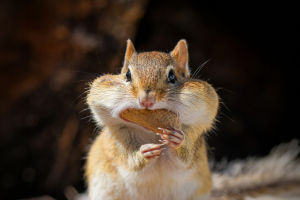 Chipmunks’ Clever CheeksTiny speedsters with secret storage — how chipmunks gather, store, and survive daily
 -
 Wild Flowers at HomeA Simple Guide to Starting Home Floral Arranging with Everyday Blooms
 -
 Safe Dog CareLeaving Home for Days? 4 Simple Ways to Keep Your Dog Safe, Happy, and Comfortable While You Are Away!
Copyright © zogu 2021 - 2025. All Right Reserved.